Synchronizing Cambridge Literacy Frameworks with IATELS Methodology
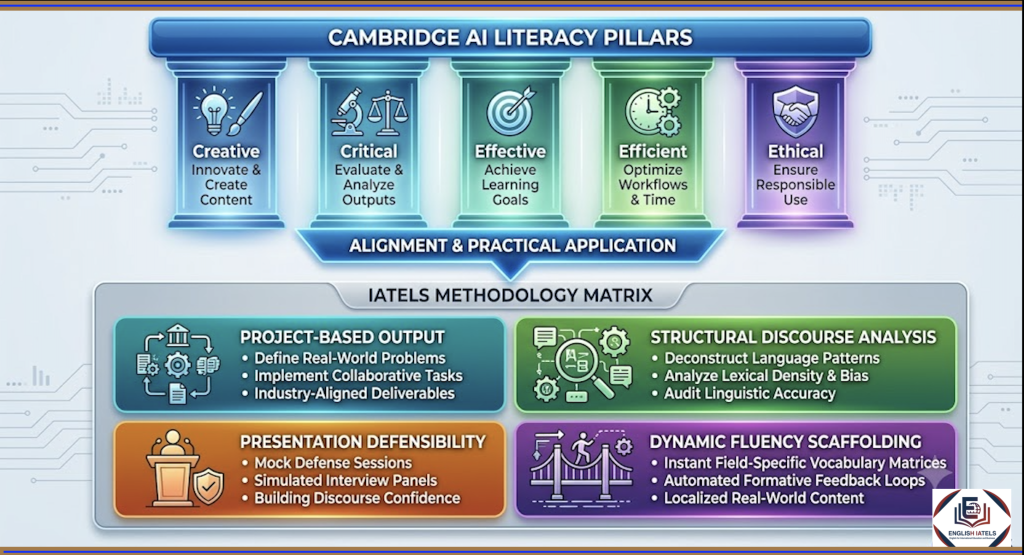
The publication of the Cambridge University Press Element, AI-Powered Language Teaching (2026) by Jeong-Bae Son and Andrew Philpott, marks a decisive moment in modern applied linguistics. The text shifts the focus from treating artificial intelligence as merely an automated tool to establishing it as a foundational domain of academic literacy. Son and Philpott outline a clear five-pillar AI literacy framework for language classrooms: using AI creatively, critically, effectively, efficiently, and ethically.
At the International Association for Technology, Education and Language Studies (IATELS), this structural shift directly aligns with our long-standing mission.
By combining the theoretical rigor of the Cambridge literacy pillars with the project-based, communicative methodologies of the English IATELS, we move beyond basic classroom integration and outline a comprehensive framework for practical application and professional teacher development.
Conceptual Alignment: Cambridge Literacy Pillars vs. English IATELS Methodologies
The core value of the Son and Philpott (2026) framework lies in its rejection of passive automation. It requires teachers and students to actively evaluate AI systems. This matches the pedagogical philosophy of English IATELS, where language acquisition is driven by critical thinking, presentation defensibility, and real-world project outcomes.
Creative & Critical Synthesis
Son and Philpott emphasize that creative and critical AI engagement requires learners to co-create with technology while remaining deeply skeptical of its outputs. At English IATELS, this aligns perfectly with our focus on presentation defensibility. We do not use AI to simply generate clean essays; instead, we task students with using AI to simulate opposing arguments for a research defense. Students must critically identify flaws, evaluate algorithmic biases, and improve their argumentation, turning the AI into a dynamic sparring partner for advanced discourse.
Effective & Efficient System Design
Efficiency in language learning means reducing cognitive load during mechanical tasks so students can focus on high-level communication. While the Cambridge text highlights how AI tools optimize assessment and feedback loops, English IATELS implements this by using AI as a dynamic fluency scaffold. By using AI to instantly generate localized, field-specific vocabulary matrices and structural reading blocks, we ensure our curriculum remains highly tailored to specific professional fields without delaying lesson delivery.
Practical Application: AI Within the English IATELS Framework
To move from theory to practice, English IATELS integrates AI directly into our advanced language and exam preparation modules. This operational approach serves as a functional model for modern digital classrooms.
A. Automated Formative Feedback Loops
Instead of waiting days for structural evaluations on complex writing assignments, students interact with custom-prompted AI diagnostic models. These models are calibrated to specific rubric constraints, such as IELTS band descriptors or academic publishing standards. The AI analyzes text structures, transitions, and lexical density instantly. This allows human instructors to focus their time on nuanced, high-level stylistic adjustments and argumentative clarity during live sessions.
B. Contextualized Field Material Generation
Traditional textbooks often struggle to keep up with the fast-evolving vocabulary of technical fields. By applying AI efficiently and ethically, English IATELS faculty generate specialized reading comprehension blocks that mirror the exact corporate realities of business or specific engineering disciplines. AI safely synthesizes current industry trends into graded linguistic materials, giving students access to highly relevant, real-world texts.
C. Simulating Advanced Academic Discourse
In our programs and courses AI engines serve as simulated interview panels, peer reviewers, or seminar participants. Students interact with these agents to practice presenting research, defending hypotheses, and responding to complex questions. This approach helps reduce language learning anxiety by allowing students to build communicative confidence in a supportive, low-stakes digital environment before presenting to live international audiences.
Streamlining the English IATELS Experience for Teacher Professional Development
The true value of these digital insights lies in sharing them with the wider educational community. The challenges noted by Son and Philpott—such as teacher anxiety, lack of technological confidence, and the digital divide—can be systematically solved through structured training.
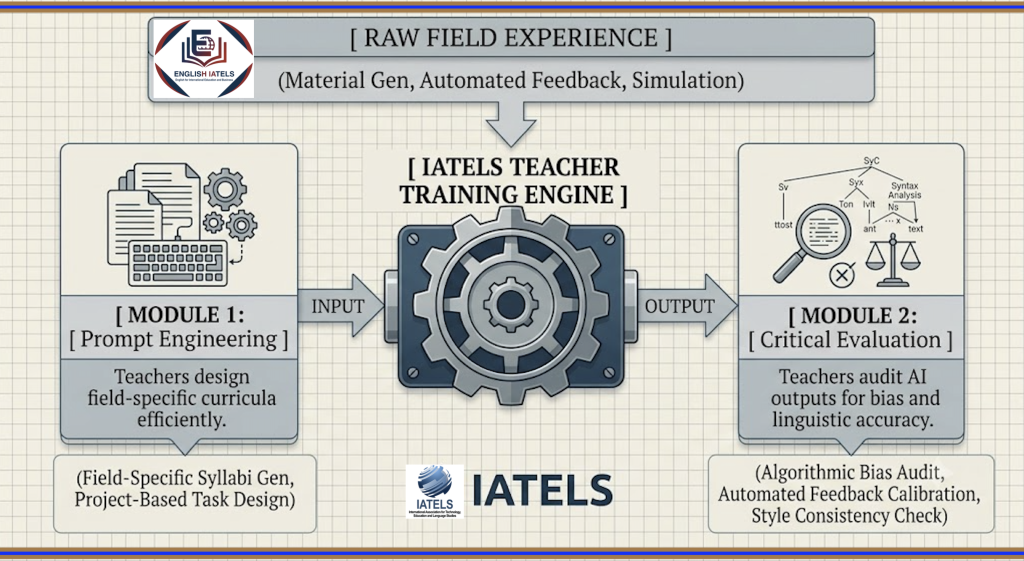
IATELS is transforming our practical field experience into targeted professional development courses for language teachers and educational leaders.
Module 1: Applied Prompt Engineering for Curricular Design
Many professional development courses focus too heavily on abstract software overviews. The English IATELS curriculum focuses on building practical technical and teaching skills. We teach educators how to write highly specific prompts to build field-aligned syllabi, design vocabulary exercises, and create targeted reading comprehension assessments. This training helps teachers cut down on administrative prep time, allowing them to focus more energy on active, face-to-face instruction.
Module 2: Pedagogical Auditing and Critical AI Literacy
In line with the Cambridge focus on critical and ethical AI use, our training modules show teachers how to act as critical editors of AI content. Educators learn to spot subtle algorithmic hallucinations, correct unnatural phrasing generated by large language models, and audit automated feedback for grading accuracy. This ensures that the human teacher remains the ultimate authority in the classroom.
Module 3: Managing AI-Driven Formative Assessment
We train teachers to build and run hybrid assessment spaces where AI handles initial structural diagnostics while the human educator delivers final, high-impact qualitative guidance. This balanced approach helps schools optimize their grading workflows without losing the vital personal connection between teacher and student.
Conclusion: Leading the Future of ELT
The integration of artificial intelligence into language education is not about replacing human instruction; it is about elevating it. As Son and Philpott (2026) state, success depends entirely on developing comprehensive AI competencies among educators and students alike.
By grounding these technical tools within the proven methodologies of English IATELS, we provide a clear, actionable blueprint for global education. Through our upcoming professional development programs and international conference networks, IATELS remains dedicated to empowering language teachers to lead this digital transformation with confidence, skill, and pedagogical purpose.
Are you ready to upgrade your institutional language framework? Discover how the English IATELS curriculum and professional teacher training modules can transform your department.
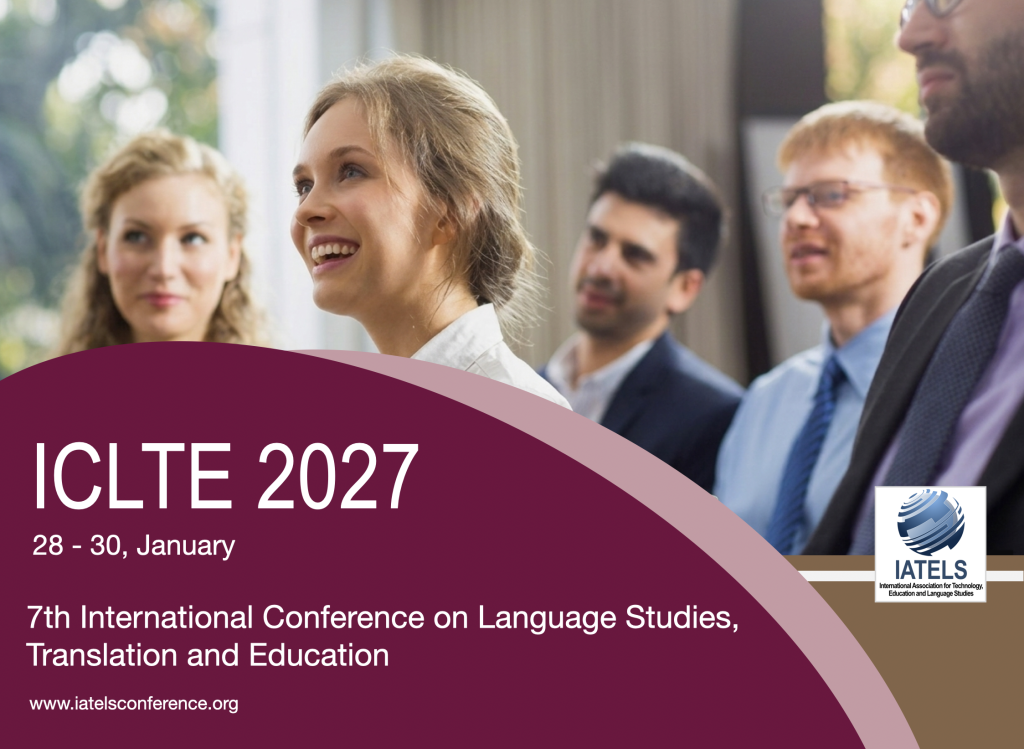
ICLTE 2027 - 7th International Conference on Language Studies, Translation and Education organized by IATELS in partnership with University of Management and Technology (Pakistan) and sponsored by STARTINFORUM (Turkiye)
